Writing linear equations from word problems can be a challenging task, especially for students who are new to algebra. However, with practice and patience, anyone can master this skill. The key is to understand how to translate the information given in the word problem into a mathematical equation. This requires identifying the variables, constants, and the relationship between them. By doing so, you can write a linear equation that accurately represents the situation described in the word problem.
A word problem is a mathematical problem that is stated in words rather than in mathematical symbols. It usually involves a scenario or a situation that requires mathematical modeling to solve. When it comes to writing linear equations from word problems, the first step is to read the problem carefully and identify the key elements. This includes identifying the variables, constants, and the relationship between them. Once you have identified these elements, you can start translating the word problem into a linear equation.
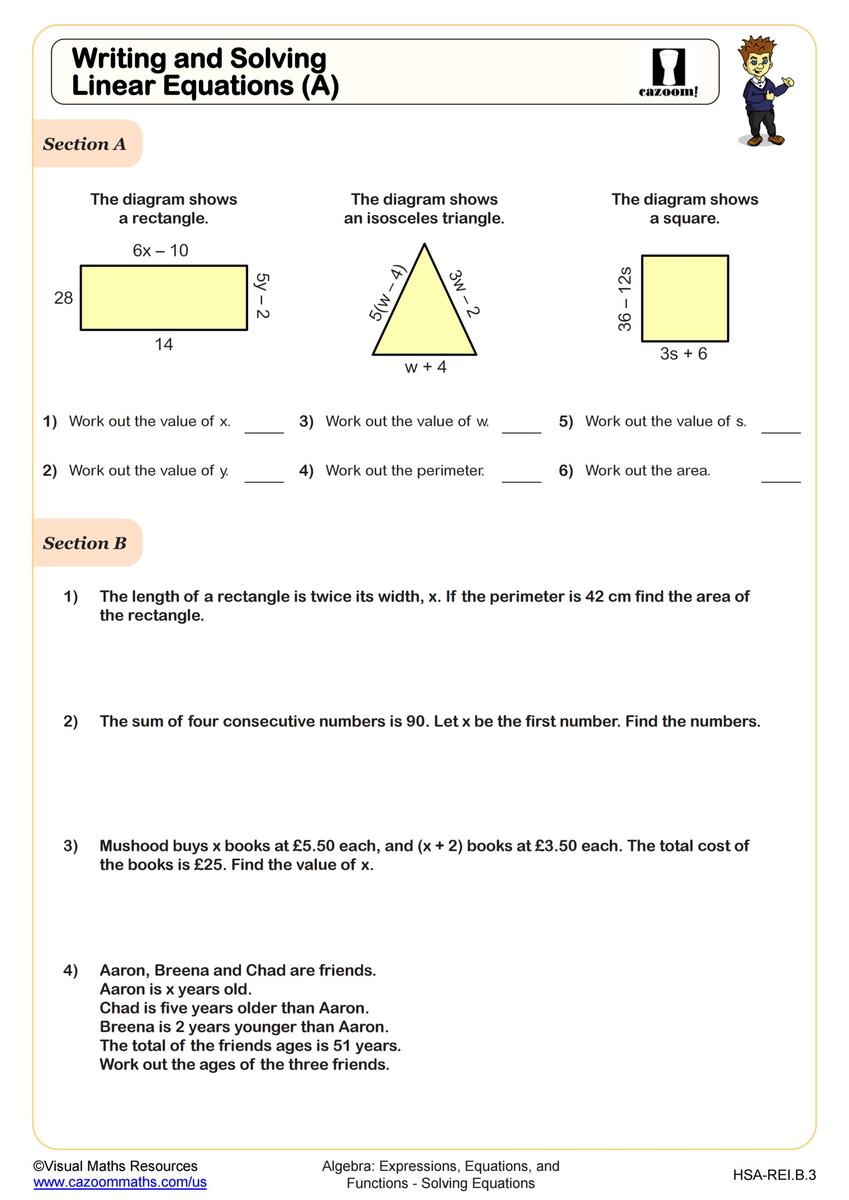
Writing And Solving Linear Equations A Worksheet Fun And Engaging Algebra I PDF Worksheets Cazoom Math
Understanding the Basics of Linear Equations
To write a linear equation, you need to understand the basics of linear equations. A linear equation is an equation in which the highest power of the variable is 1. It can be written in the form of ax + b = c, where a, b, and c are constants, and x is the variable. The goal is to isolate the variable, which is usually represented by x. By understanding the basics of linear equations, you can start translating word problems into mathematical equations.
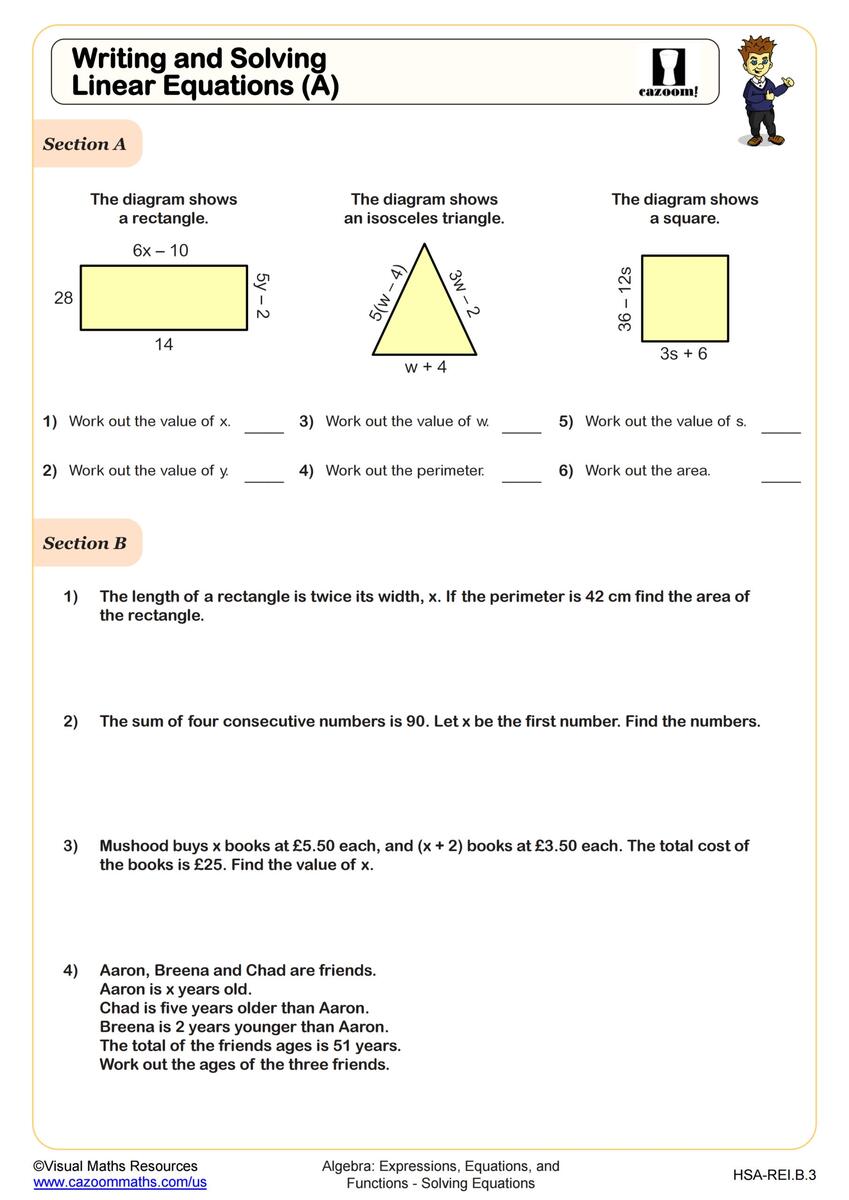
Writing And Solving Linear Equations A Worksheet Fun And Engaging Algebra I PDF Worksheets Cazoom Math
Identifying Key Elements in Word Problems
Identifying key elements in word problems is crucial when it comes to writing linear equations. This includes identifying the variables, constants, and the relationship between them. The variable is usually the unknown quantity that you are trying to solve for. The constant is a fixed value that does not change. The relationship between the variables and constants can be represented by mathematical operations such as addition, subtraction, multiplication, or division. By identifying these key elements, you can start translating the word problem into a linear equation.
Translating Word Problems into Linear Equations
Translating word problems into linear equations requires practice and patience. The first step is to read the problem carefully and identify the key elements. Once you have identified these elements, you can start writing the linear equation. This involves using mathematical symbols and operations to represent the relationship between the variables and constants. By translating word problems into linear equations, you can solve a wide range of mathematical problems and develop a deeper understanding of algebra.
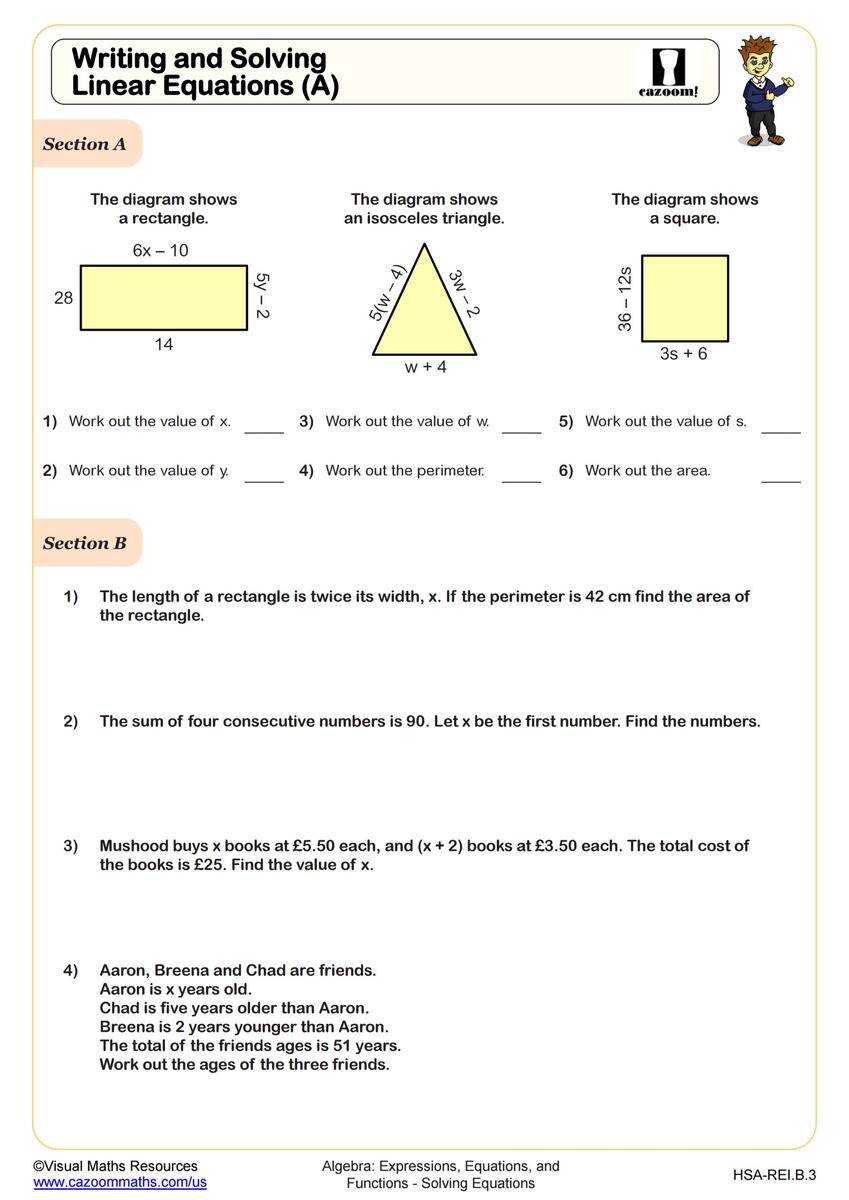
Writing And Solving Linear Equations A Worksheet Fun And Engaging Algebra I PDF Worksheets Cazoom Math
By following these steps and practicing regularly, you can become proficient in writing linear equations from word problems. Remember to always read the problem carefully, identify the key elements, and use mathematical symbols and operations to represent the relationship between the variables and constants. With time and practice, you can master the skill of writing linear equations from word problems and improve your overall math skills.
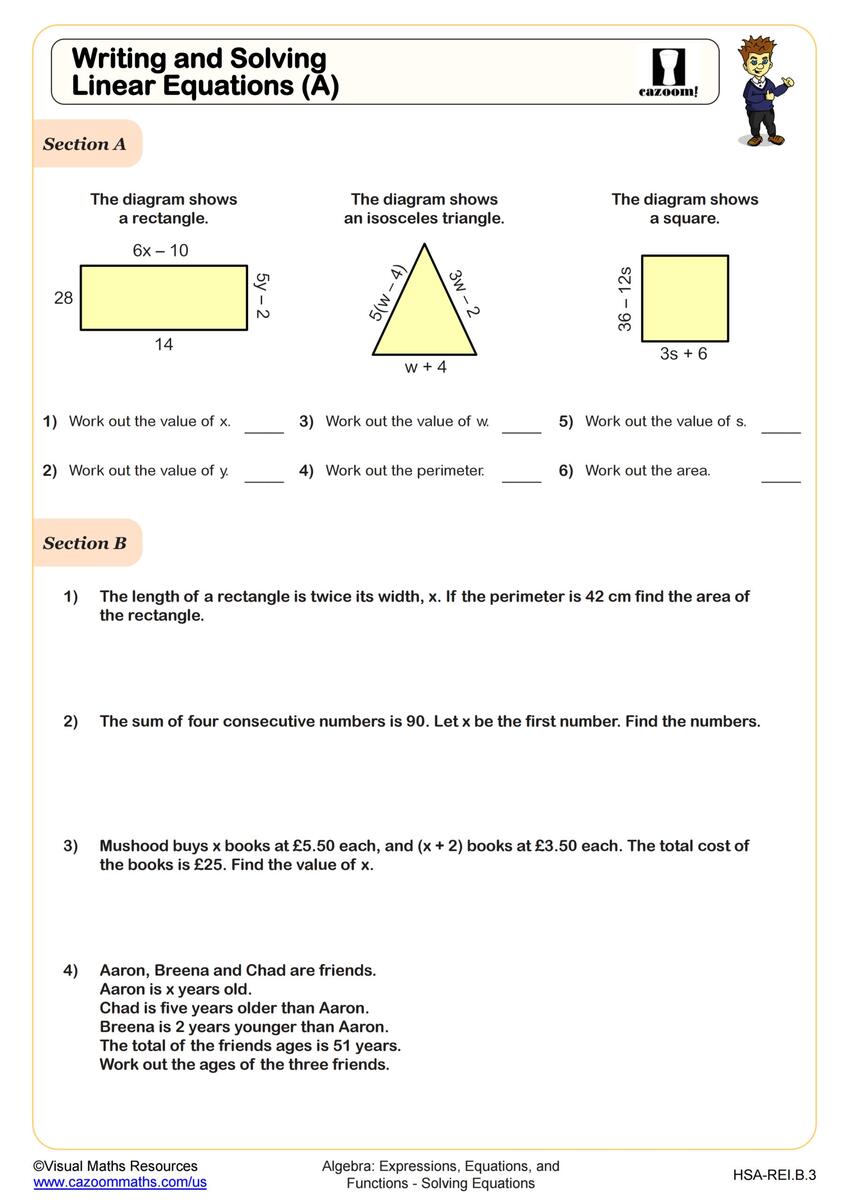
Writing And Solving Linear Equations A Worksheet Fun And Engaging Algebra I PDF Worksheets Cazoom Math
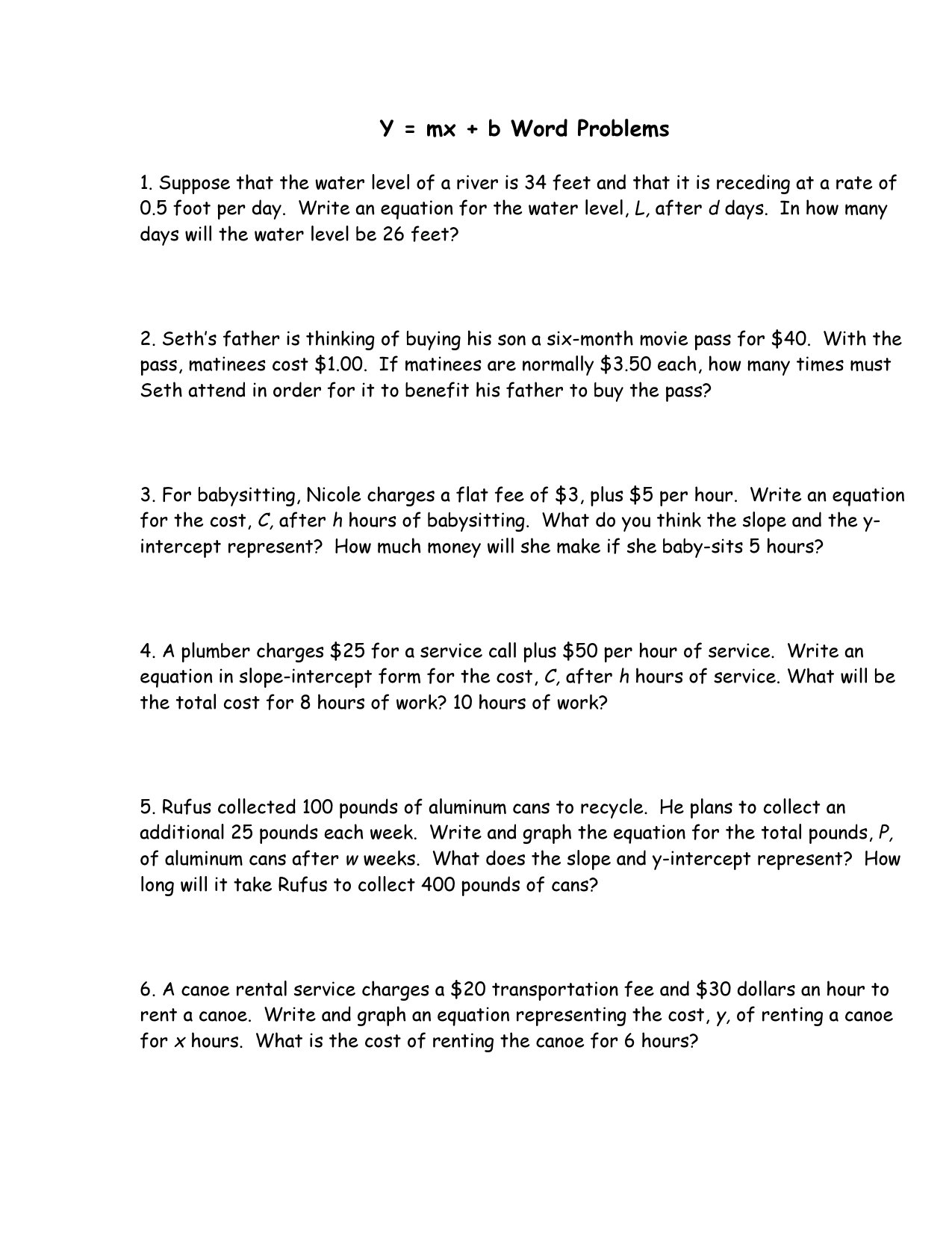
Y Mx B Word Problems Linear Equations Worksheet