Complementary and supplementary word problems are fundamental components of mathematics, particularly in geometry and trigonometry. These concepts are essential for understanding the relationships between angles and their applications in various real-world scenarios. Complementary angles are two angles whose measures add up to 90 degrees, while supplementary angles are two angles whose measures add up to 180 degrees. Mastering these concepts is crucial for solving complex mathematical problems and applying them to practical situations.
The ability to solve complementary and supplementary word problems is a significant aspect of mathematical literacy. It involves not only understanding the definitions of these angles but also being able to apply this knowledge to solve problems presented in word form. This requires a combination of mathematical skills, including the ability to interpret the problem, apply the relevant formulas, and calculate the solution. Moreover, it demands a logical and methodical approach to ensure accuracy and precision in the solutions provided.
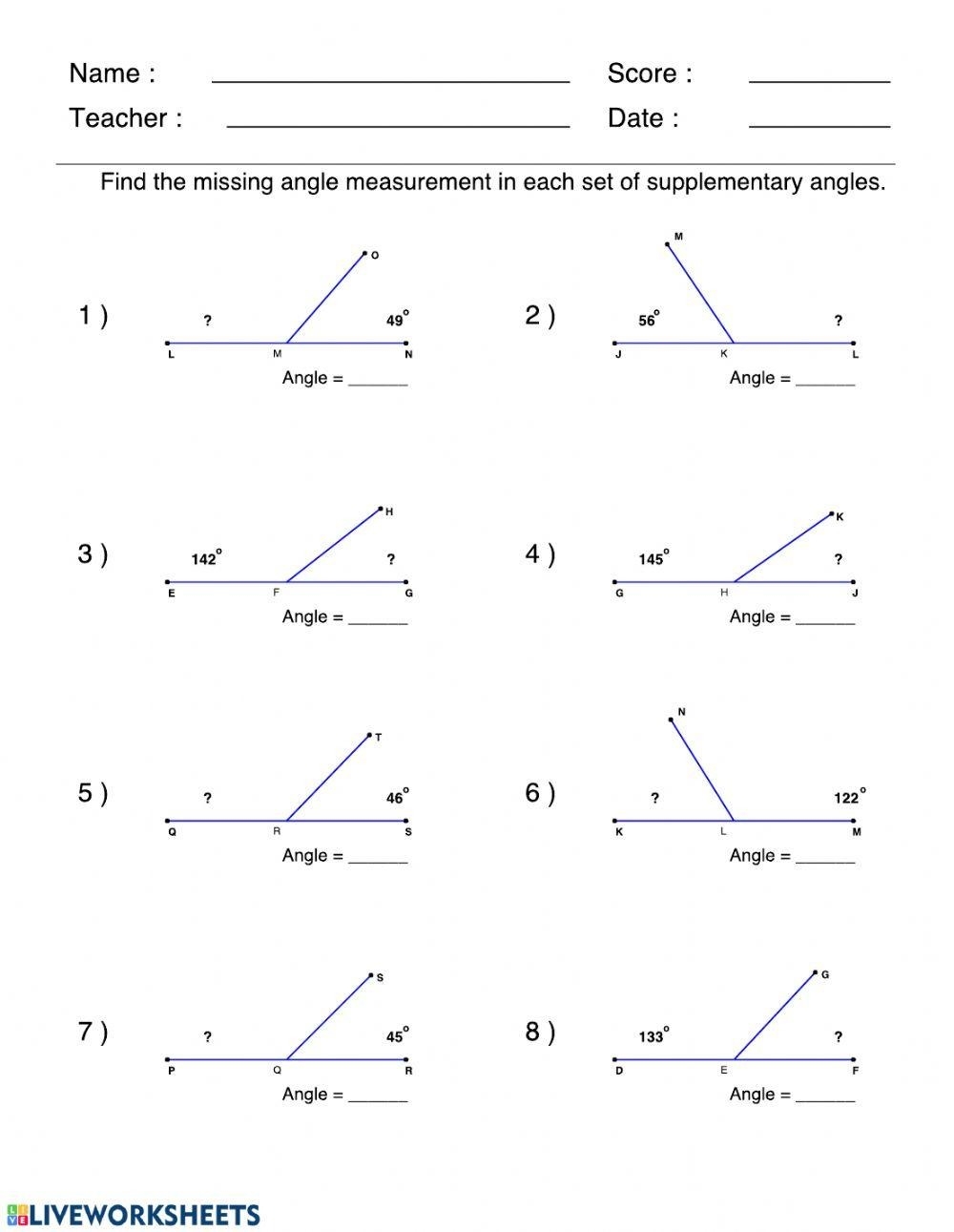
Creating A Strong Foundation The Best Complementary And Supplementary Angles Worksheets For Teachers The Teach Simple Blog
Understanding Complementary and Supplementary Angles
Comprehending complementary and supplementary angles is the first step towards solving word problems related to these concepts. It is essential to recognize the relationship between these angles and how they can be applied to solve problems. For instance, if two angles are complementary, and one angle is 60 degrees, the other angle must be 30 degrees because 60 + 30 = 90 degrees. Similarly, for supplementary angles, if one angle is 120 degrees, the other must be 60 degrees because 120 + 60 = 180 degrees. Understanding these relationships is key to solving word problems accurately.
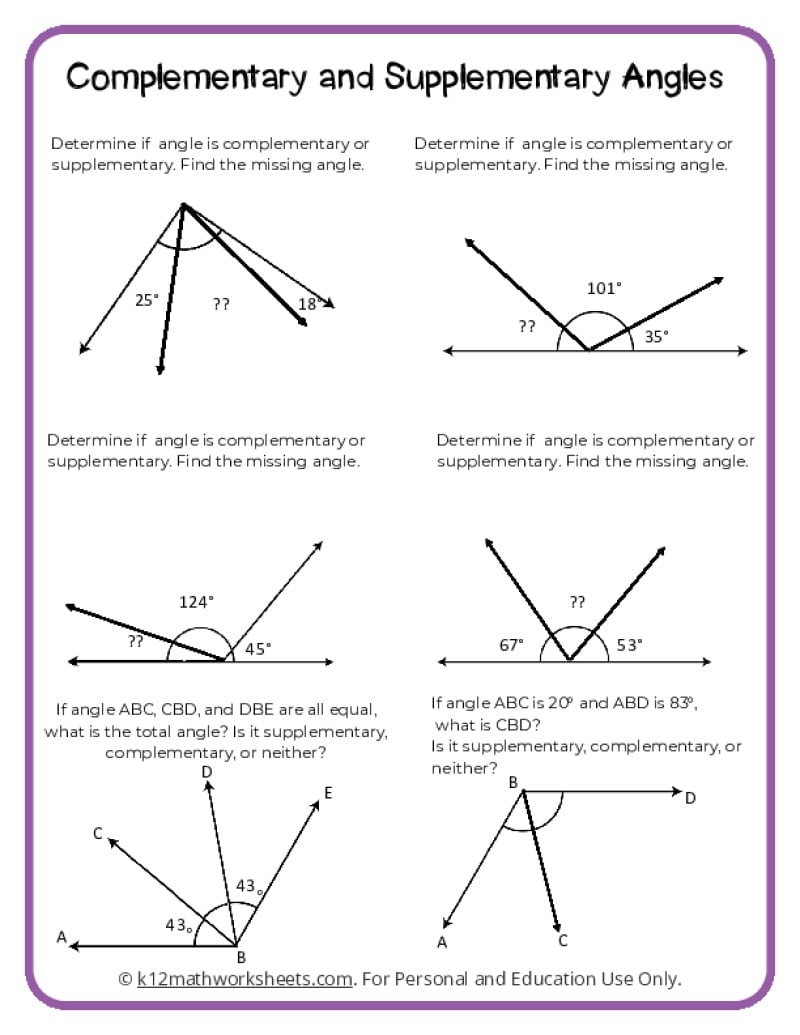
Complementary Supplementary Vertical And Adjacent Angles
Solving Complementary and Supplementary Word Problems
Solving word problems involving complementary and supplementary angles requires a systematic approach. First, it is crucial to read the problem carefully and identify the type of angles involved. Then, apply the relevant formula or relationship to find the missing angle. For example, if a problem states that two angles are supplementary and one of them is 45 degrees, you can find the other angle by subtracting 45 from 180 degrees, which gives you 135 degrees. This methodical approach ensures that solutions are found accurately and efficiently.
Applying Mathematical Concepts to Real-World Scenarios
Applying mathematical concepts, such as complementary and supplementary angles, to real-world scenarios is a vital skill. These concepts are used in various fields, including architecture, engineering, and design. For instance, architects use these principles to design buildings with precise angles, ensuring stability and aesthetic appeal. Similarly, engineers apply these concepts in the construction of bridges, roads, and other infrastructure projects. By mastering complementary and supplementary word problems, individuals can develop a deeper understanding of how mathematical concepts are applied in practical situations, enhancing their problem-solving skills and versatility in their chosen professions.
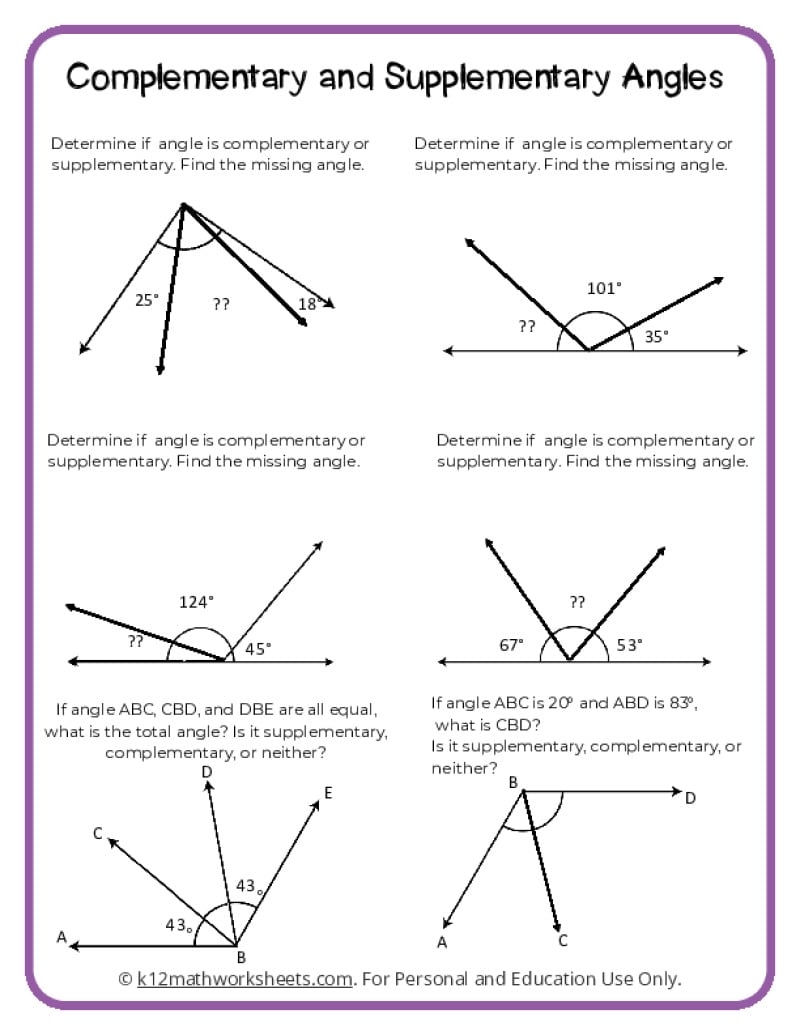
Complementary Supplementary Vertical And Adjacent Angles
In conclusion, complementary and supplementary word problems are an integral part of mathematical education, serving as a foundation for more complex concepts and real-world applications. By providing comprehensive worksheet answers and explanations, individuals can improve their understanding and ability to solve these problems. This not only enhances their mathematical skills but also prepares them for careers that require the application of mathematical principles to solve practical problems. Therefore, it is essential to practice and master these concepts to achieve proficiency in mathematics and its applications.
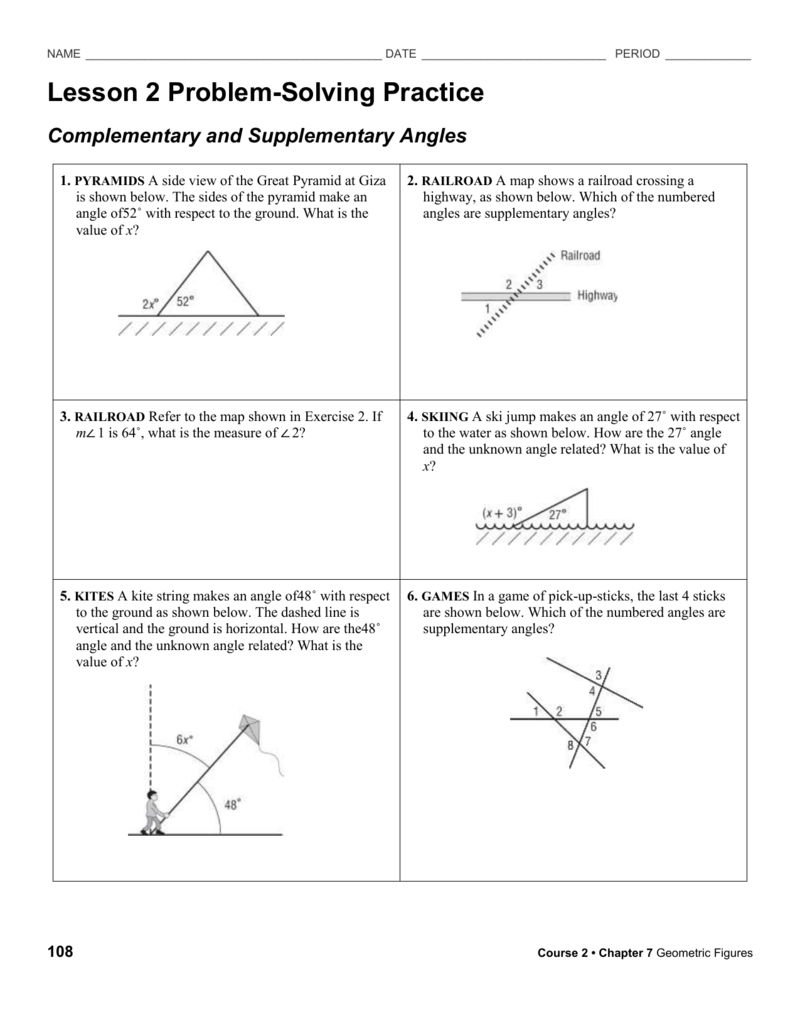
Complementary Supplementary Angles Practice Worksheet
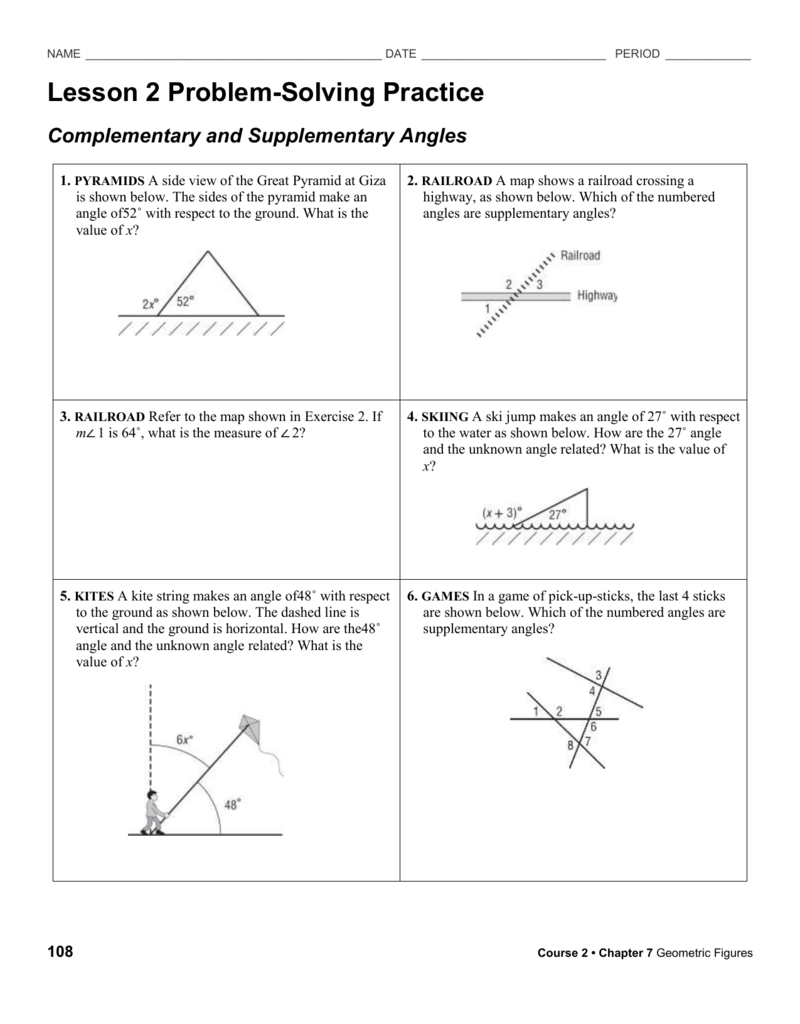
Complementary Supplementary Angles Practice Worksheet